

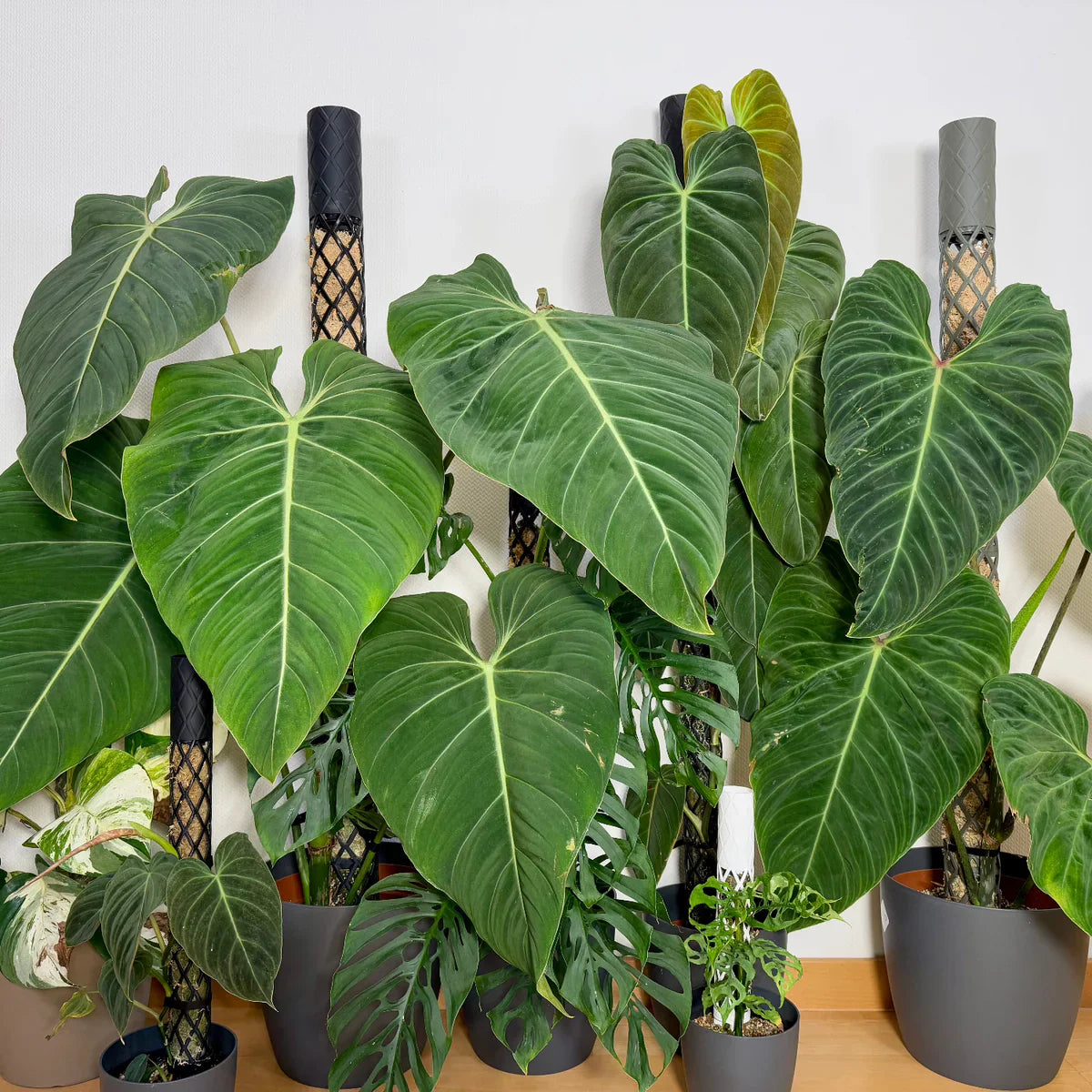
“Chop and extend” means “cut and extend”. In nature, plants such as Monstera, Philodendron and Anthurium grow up trees. This vertical growth causes the plant to change hormonally .

In addition, their adhesive and aerial roots cling to the trees. The tropical climate with its high humidity ensures that the roots on the tree find moisture and nutrients. This gives the plant large leaves.
growth on the moss stick
With a moist moss stick we can perfectly imitate this natural environment. While the aerial roots of a Monstera, which form anew at each node, still grow happily in our rooms with a humidity of 40-60%, the situation is different for most Philodendrons.
Their roots will dry out within 1 to 2 weeks if they don't find moisture. This is why a waterable moss stick is so important.
Roots that would normally dry out in our drier conditions find water and nutrients in the moist interior of the moss stick.

Back to "Chop and Extend"
In nature, a plant could easily climb 20-meter-high trees. But in our apartment, we only have about 2.5 meters available. So what happens when the plant reaches this height? Just cut off the top part?!
This is usually the only solution with conventional trellises. The plant will then sprout again at the top, but will then soon need to be cut again. The lower leaves will grow older and will naturally fall off at some point.

The result: bare at the bottom, a clump of leaves at the top. This does not create a harmonious overall picture.
But we can use a trick: “Chop and Extend” .
How does it work?
1. The plant grows into the moss stick with its aerial roots, which form in each leaf axil. There it finds water and nutrients and develops its root system. The leaves grow quickly.

2. Once the plant has reached its maximum height , which is typically limited by the space, we cut off the upper part. A rule of thumb: the shoot tip should have 3-5 leaves or more.
It is important to use a sharp knife or scissors to keep the cutting surface as smooth as possible. Blunt cutting tools will crush the trunk, which increases the risk of infection by bacteria and fungi.

3. Thanks to the modular moss stick, we can now simply twist it apart and carefully separate the roots, which are usually very overgrown.

4. The upper part of the plant can now be potted directly into a new pot with fresh substrate and slow-release fertilizer. The plant will continue to grow as if it had not been cut

5. The lower part of the plant can also be used, as you will have a whole series of already rooted cuttings. It is recommended to remove these as individual cuttings from the moss stick and reuse the modules. The cuttings make excellent gifts for friends and family.
6. The plant will now continue to grow quickly and reach the top again. Under good conditions, which means a waterable moss stick, sufficient light, high-quality fertilizer and good watering, most philodendrons, monsteras and ivy plants can grow 1-2 meters per year

Conclusion:
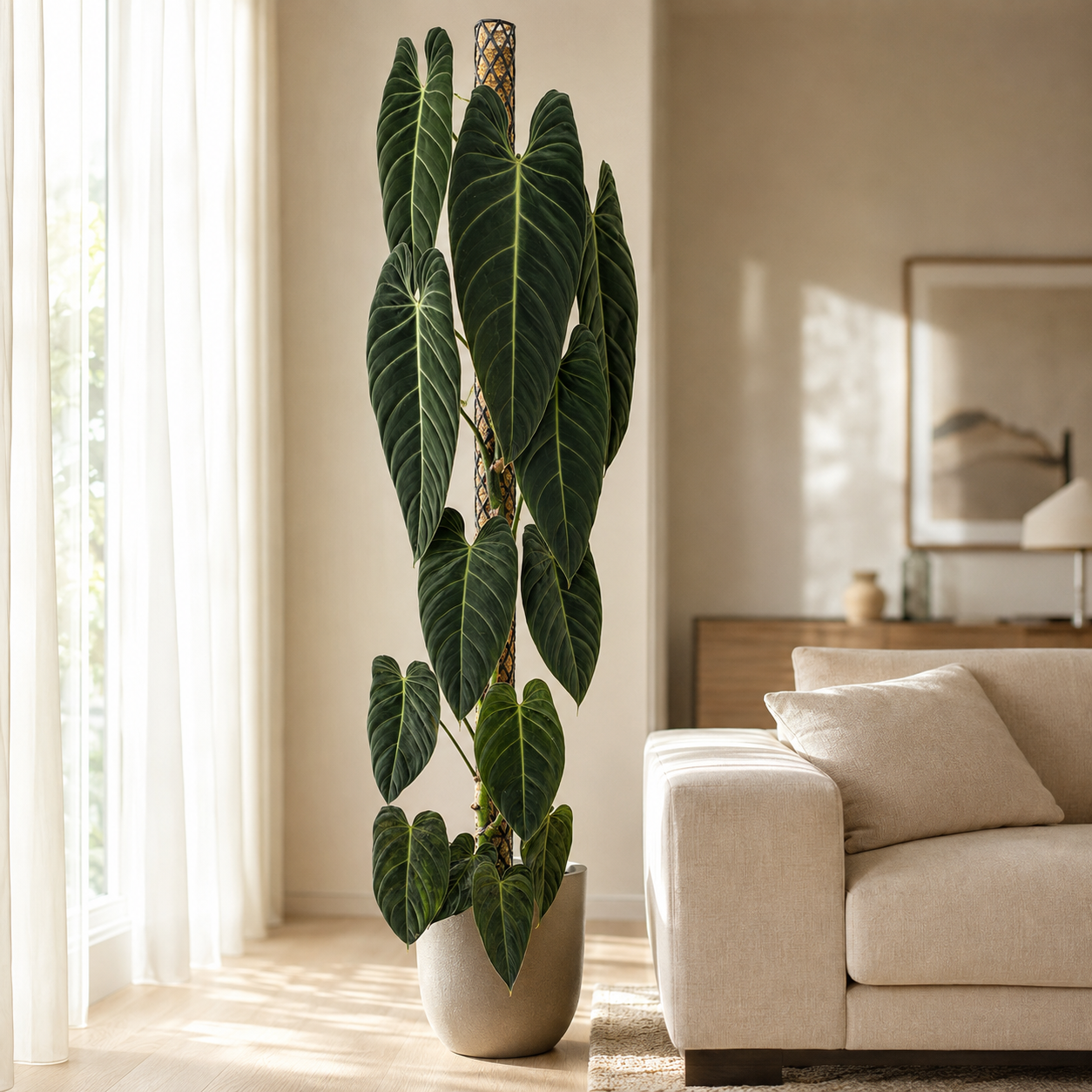
As the plant continues to grow upwards, it produces increasingly larger leaves. In normal home conditions, a Monstera or Philodendron can grow to a height of around 2.5 metres.
In order to imitate the natural growth of a 20-meter-high tree, we use the "chop and extend" method. This is the only way to get a plant that looks vital and grows continuously in the long term.

Why a moss stick is so important – and which plants it is suitable for